Getting-paid guides · 18
How much should I charge per hour as a freelancer? Find your floor, then check the marketFind the number below which you are working for free, then see what the client's market will pay.
Here is the formula for a freelance minimum hourly rate: (the income you want in a year + a year of business costs) ÷ (1 − the share you lose getting paid) ÷ the hours you can actually bill in a year. Want $60,000 a year, spend $6,000 running the business, lose 5% on payments and bill 1,150 hours, and your floor is about $60 an hour. Plenty of people divide $60,000 by 2,080 hours instead and get $28.85. Take work at that rate and a full year of it still won't pay you the $60,000.
On this page
- The minimum rate formula, with one example worked end to end
- You can bill fewer hours a year than you think
- Business costs, self-employment contributions and payment loss
- Check it against the market: employee pay plus employer cost
- Turn it into a day rate and a project price
- After each job, work out your effective hourly rate
- When to raise your rate, and how to tell existing clients
- Four common mistakes when setting a rate
- FAQ
- What to read next
01The minimum rate formula, with one example worked end to end
Your minimum rate answers one question: what do you have to charge per hour so that a year of work pays you the income you want? It ignores what the market will pay and looks only at your own numbers. Four of them are enough:
| Input | Example | Where it comes from |
|---|---|---|
| Income you want in a year (before tax) | $60,000 | What you need to live on, or what you earned in your last salaried job |
| A year of business costs | $6,000 | Software, equipment, internet, bookkeeping, insurance; go through last year's statements |
| Payment loss | 5% | Platform fees plus the FX spread on the channel you actually use |
| Billable hours a year | 1,150 hours | 46 weeks × 25 hours a week, explained in the next section |
Put them in: 66,000 ÷ 0.95 ≈ $69,474, which is what you need to invoice over the year. Divide by 1,150 hours and you get about $60.40 an hour. Charge less than $60 and your savings are subsidising the client.
This is the same calculation our hourly rate calculator runs, so you can put the four numbers in there and read off the result. The sections below cover how to fill each one in without fooling yourself.
02You can bill fewer hours a year than you think
2,080 hours is an employee's year: 40 hours a week for 52 weeks, with paid holidays counted in. Freelancers don't get paid holidays, and a big part of the working week earns nothing: finding clients, writing proposals, calls, invoicing, chasing payments, learning new tools.
Take holidays out first. Of 52 weeks, keep six for holidays, sick days and public holidays, leaving 46. Then take out the time you can't bill. You might sit at the desk 40 hours a week and still only invoice part of it; the example uses 25 hours, which makes 1,150 hours a year, close to half of 2,080 gone.
The 25 is only an example; measure your own. The simplest way is to log two weeks: write down what you did, from when to when, and whether it was billable. Add up the billable hours at the end and divide by two. Early on, with few steady clients, the number tends to be low; it creeps up as repeat clients cut the time you spend finding work.
03Business costs, self-employment contributions and payment loss
Business costs go into the income target as a yearly total. The ones people miss: design and development software, domains and cloud services, a laptop and monitor spread over roughly three years, an accountant or tax filing service, professional liability insurance and coworking rent. If you are not sure, pull last year's card statements and add up the work-related lines.
Social contributions you pay as a self-employed person vary a lot by country. As an employee, your employer paid part of them for you; on your own, you pay all of it. Two examples you can check:
- United States: the self-employment tax rate is 15.3%, made up of 12.4% for Social Security and 2.9% for Medicare, charged on net self-employment earnings, as the IRS self-employment tax page sets out.
- United Kingdom: for the 2026 to 2027 tax year, Class 4 National Insurance is 6% on profits between £12,570 and £50,270 and 2% on profits above that, according to the GOV.UK page on self-employed National Insurance rates.
Anywhere else, search your tax authority's site for the self-employed contribution rules. The simplest approach is to set your income target before tax and contributions, so they come out of it. If you would rather work from take-home pay, turn your after-tax goal into a pre-tax one first, as the FAQ on the hourly rate calculator shows.
Payment loss is the slice this site keeps coming back to: PayPal, Wise, Payoneer and USDT each take it differently, so estimate a percentage for the channel you actually use. If you don't know yours yet, price your work to cover payment fees shows how to back it out from your last job.
04Check it against the market: employee pay plus employer cost
Once you have a floor, check whether the client's market will pay it. A useful yardstick is what an employee in the same role is paid, plus everything else the employer spends on that employee, because the client is often comparing you with what it would cost to hire someone.
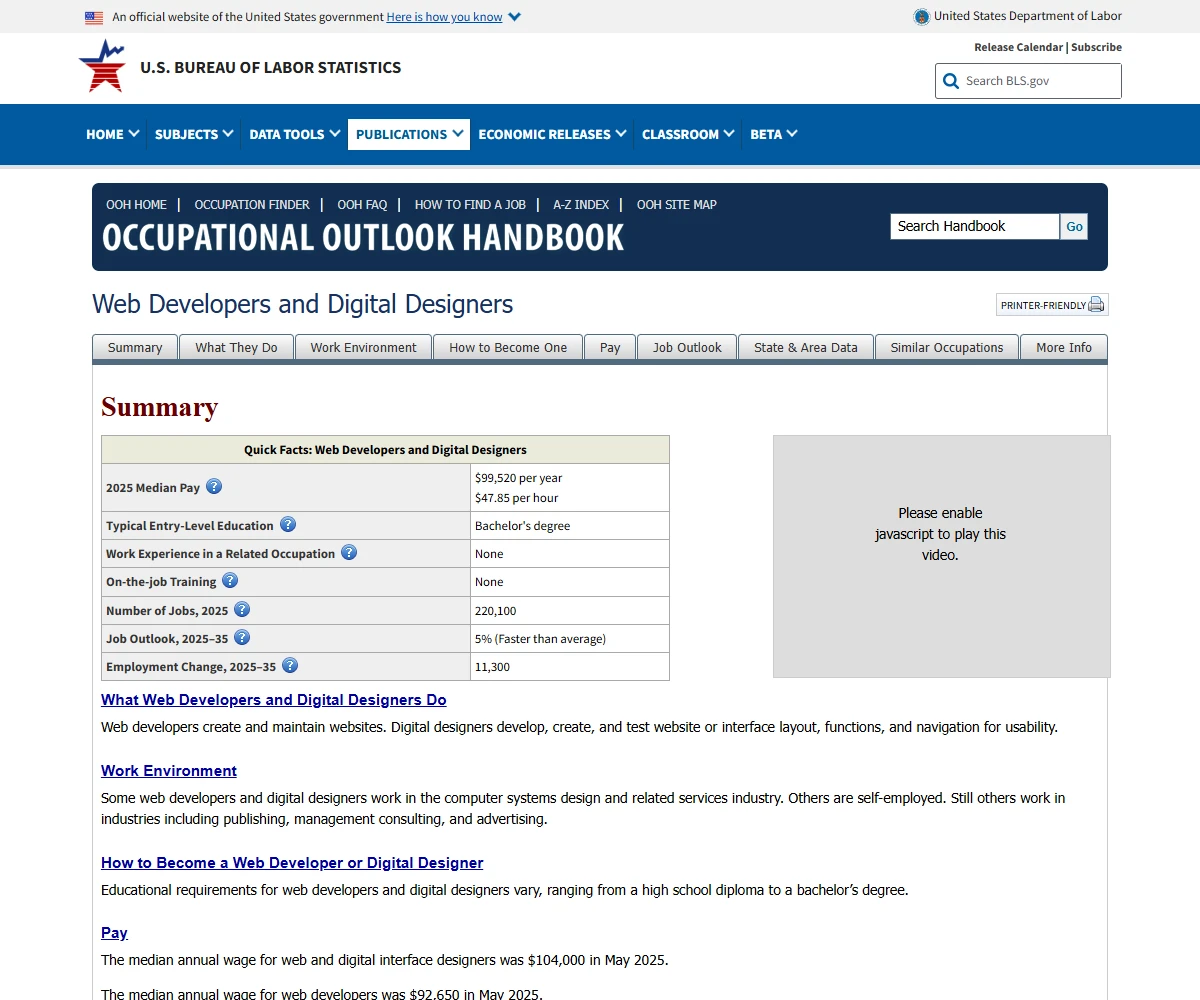
Take a US client. The Bureau of Labor Statistics Occupational Outlook Handbook lists median pay by occupation; for web developers and digital designers, 2025 median pay was $99,520 a year, or $47.85 an hour. The hourly figure is roughly the annual figure divided by 2,080 hours, so it assumes a full working year.
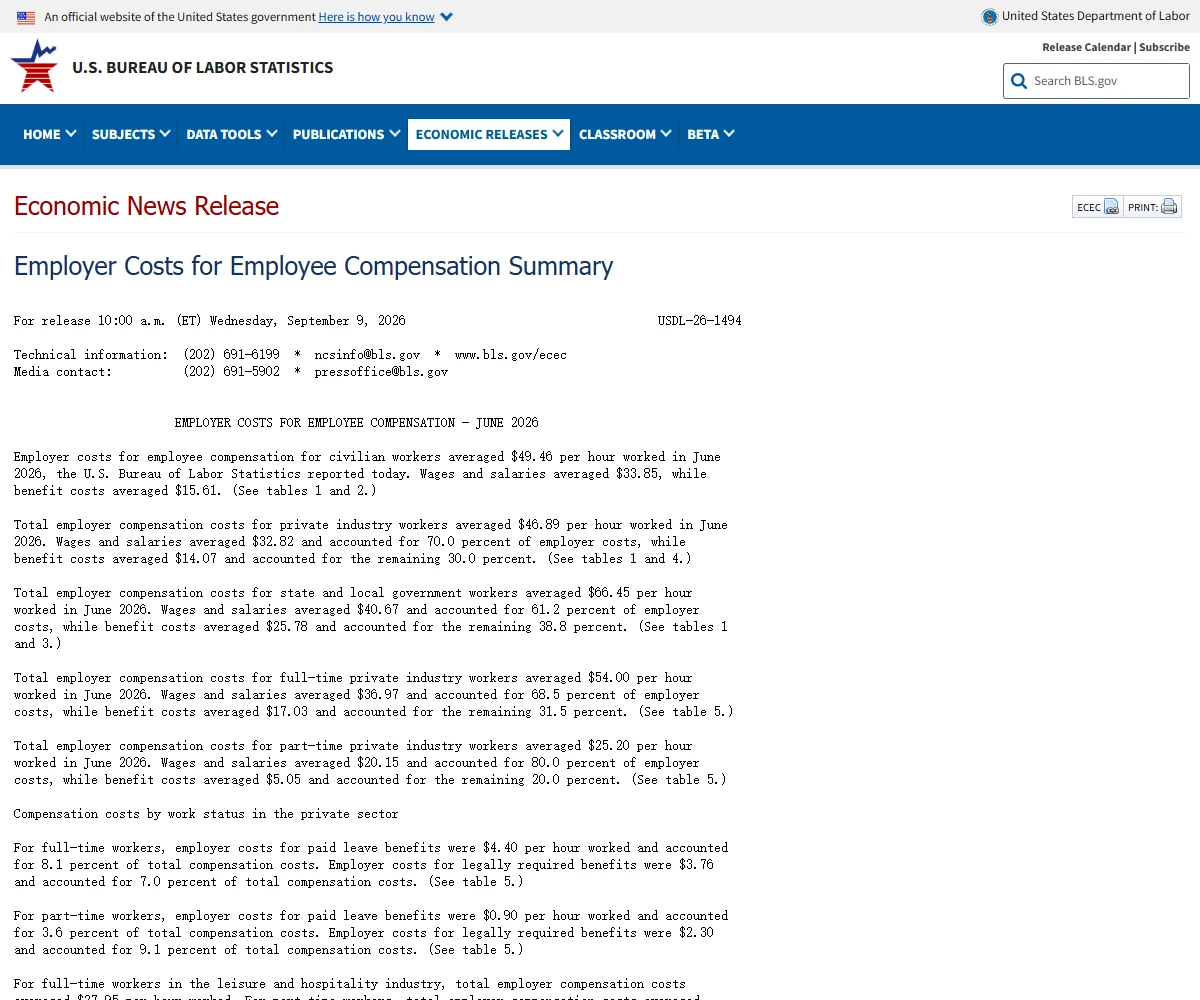
Wages are only part of what an employer pays. BLS data on employer costs for June 2026 shows US private-industry employers spending an average of $54.00 per hour worked for a full-time employee, of which wages were $36.97, or 68.5%. The other 31.5% went on benefits such as paid leave, insurance, retirement plans and legally required contributions.
Put the two together for a rough figure: $47.85 divided by 68.5% is about $70, roughly what a US company pays per hour worked for a median-level web developer. It applies an average ratio to a median wage, so treat it as a sense of scale only. The $60 floor in the example sits below it, so a US client is unlikely to see it as out of line. If your floor comes out well above the employer cost for the same role, be ready to show what the client gets for the extra: faster delivery, no management overhead, a finished result.
For a client in another country, look up that country's statistics office for pay by occupation and do the same sum: employee pay plus the employer's other costs is the yardstick the client has in mind.
05Turn it into a day rate and a project price
Most clients would rather see a day rate or a project total than an hourly figure. Once the hourly rate is set, the conversion is simple:
- Day rate: if the client books your whole day, count 8 hours, so 60 × 8 = $480. You can't take other work that day, so price the day, not just the hours at the keyboard.
- Project price: estimate the hours, multiply by the rate, then add a buffer. A 30-hour job is 30 × 60 = $1,800; add 20% for communication and rework and quote $2,160. Size the buffer from how far your actual hours ran over your estimates on past jobs.
- Platform cut: on a freelance marketplace, the platform takes a share of what you earn, as set out in its fee terms. Add it back with rate ÷ (1 − platform share). At 10%, 60 ÷ 0.9 ≈ $67, so your listed rate needs to be around $67 to leave you $60. On Upwork you also pay a fee to withdraw; Upwork withdrawal fees and methods lists what each method costs.
Put one total on the quote, and state how many rounds of revisions it covers and what extra rounds cost, so rework can't quietly eat your rate. For how to write that into a contract and split the payments, see take a deposit before you start.
06After each job, work out your effective hourly rate
A quote is built on estimates; once the job is done, check it against the real numbers. Your effective hourly rate is the money that actually reached you divided by every hour the job took, including early calls, revisions, meetings and chasing payment, not just the hours spent making the thing.
Continuing the example: you quoted $2,160 and, after 5% payment loss, about $2,052 reached you. You estimated 30 hours, but three rounds of revisions and a few meetings took it to 42. Your effective rate is 2,052 ÷ 42 ≈ $48.90 an hour, a fifth below the $60 floor.
When several jobs in a row come in under the floor, the cause is usually one of three things: hours underestimated, revisions not capped, or a payment channel taking too much. The fixes are a longer estimate next time, a fixed number of revisions in the quote, and a cheaper way to get paid. Add a column to your payment records for quote, amount received and actual hours, and after a few months you will know where your real effective rate sits.
07When to raise your rate, and how to tell existing clients
These usually mean your price is too low: you are booked several weeks out and enquiries still arrive; your effective rate has stayed under the floor for the last few jobs; clients sign your quotes with almost no pushback.
Quote new clients at the new rate straight away. For existing clients, give one to two months' notice so they can adjust their budget, and start the new rate from the next project or billing period. A short email does it:
From 1 January, my rate for new work will be USD 70 per hour (currently USD 60). Anything already agreed stays at the current rate. Happy to talk it through if it affects your plans for next quarter.
You don't have to get there in one step. Clients tend to accept 10% to 20% at a time more easily; for a bigger jump, spell out the scope at the same time so they can see what the extra pays for.
08Four common mistakes when setting a rate
Divide by 2,080 hours a year.
That is a salaried year with paid leave. Take out holidays and unbillable time and a freelancer often bills only a little over 1,000 hours.
Match the lowest prices on the platform.
The cheapest listings often come from places with very different living costs, or from people losing money to collect reviews. Anchor on them and you will likely land below your own floor.
Anything above my old hourly pay is a raise.
Your employer paid your leave, insurance and part of your social contributions. In the US, wages are only 68.5% of what an employer spends on a full-time worker, so your freelance rate has to be well above your old pay just to break even.
Once the rate is set, I'm done.
Costs, exchange rates and payment fees all move. It makes sense to compare your actual effective rate with your floor every six months, and adjust your price or your payment channel if they have drifted apart.
09FAQ
I'm just starting out. What hourly rate should I charge?
Work out your floor with the formula above, and turn down work below it where you can. With little experience, pick a figure toward the lower end between your floor and the employee rate for the same role, then move up as you build a portfolio and reviews.
Should I charge by the hour or by the project?
Hourly is safer when the brief is vague and the scope may change. Project pricing pays better when the scope is clear and you are getting faster, because the time you save is yours. Either way you need an hourly floor underneath; the project price is built from it.
A client says I'm too expensive. Should I drop my rate?
Cut the scope instead of the rate: drop some features, reduce the revision rounds, or split the work into two phases. The total comes down and your hourly rate stays the same. If the client only wants the lowest price, let the job go.
Should tax be built into my hourly rate?
Yes. The simplest way is to set your income target before tax, so tax and self-employment contributions come out of it. Rates differ by country, so check your tax authority's pages for self-employed tax and contributions; if you prefer to work from take-home pay, convert it to a pre-tax figure before using the formula.
How many billable hours a week should I assume?
Don't guess. Log two weeks: how long each task took and whether you could bill it, then add up the billable hours and divide by two. A low number when you are starting out is normal; use the real one and your floor will hold up.
10What to read next
- BLS Occupational Outlook Handbook: Web Developers and Digital Designers
- BLS: Employer Costs for Employee Compensation (June 2026)
- IRS: Self-employment tax
- GOV.UK: Self-employed National Insurance rates
Pay data and tax rates are updated every year; before you act, open the pages above and check that year's figures.