Getting-paid guides · 17
Dollars, euros or your own currency: who carries the exchange rate?Settle the currency before you send the quote. Then decide where the money lands and when to convert it.
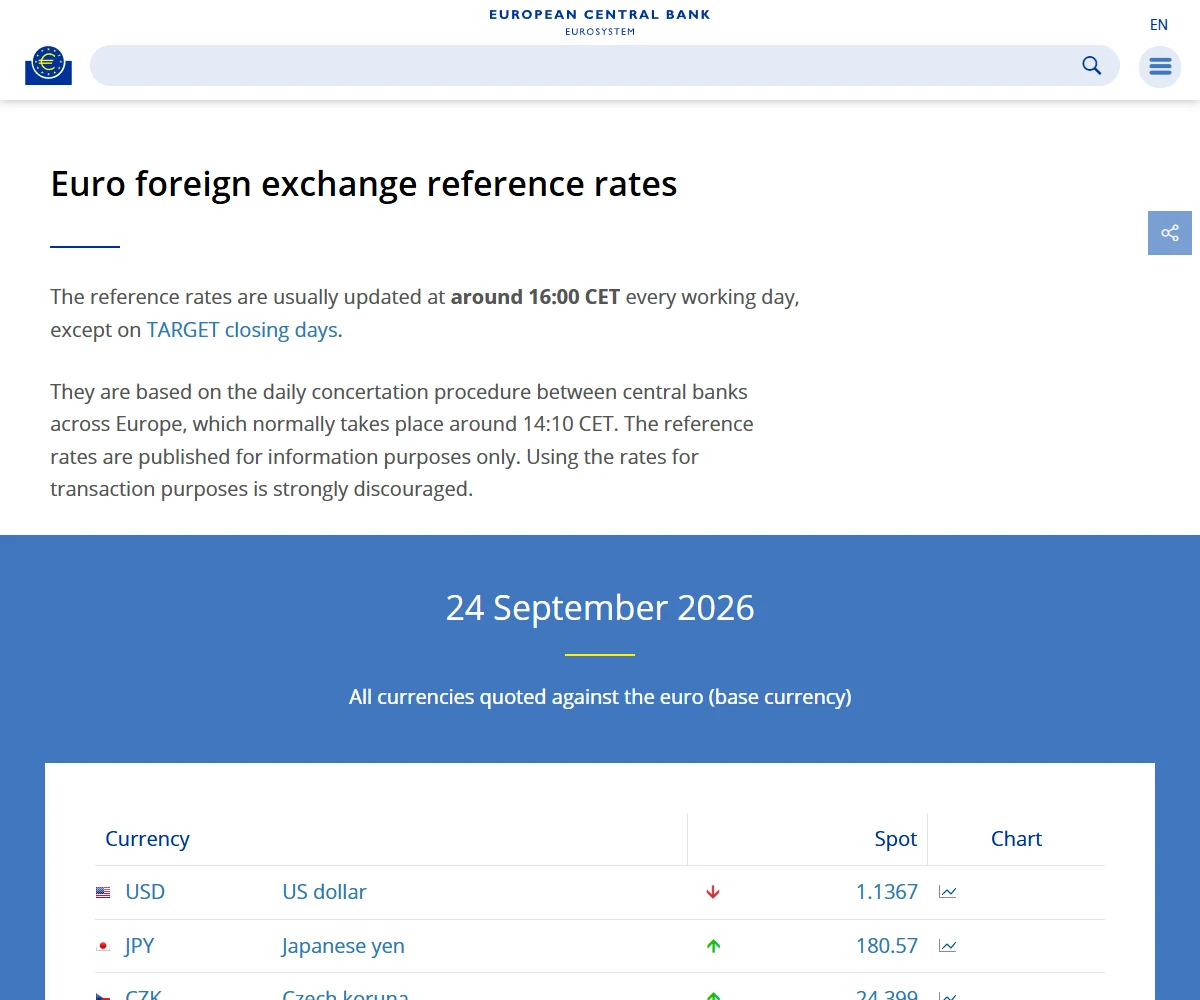
A German client sends over a contract with EUR 3,000 in the fee box. You are in Manila, and at the European Central Bank's reference rate for 24 September, one euro buys about 71.3 Philippine pesos, so the job is worth roughly PHP 214,000. Say it runs three months, the euro slips 3% against the peso in that time, and the payment comes through PayPal, which converts it to dollars at a 3% spread. You end up about PHP 12,600 short of what you counted on when you signed. The client paid every cent; the money leaked out through the exchange rate and the conversions. Most of that can be avoided by thinking about the currency before you quote.
On this page
- Whoever's currency is on the invoice, the other side carries the risk
- Which option suits which client
- How many times a euro payment gets converted
- Catch the money in its own currency
- A currency clause for longer contracts
- When to convert once the money arrives
- Ways freelancers lose money on currency
- FAQ
- What to read next
01Whoever's currency is on the invoice, the other side carries the risk
The currency on your quote decides who absorbs exchange-rate moves. The same job plays out three different ways:
- Quote in the client's currency, say EUR 3,000. The client always pays the same number, and every move in the euro lands on you.
- Quote in your own currency, say PHP 214,000. What you receive is fixed; the client has to work out the euro amount each time, so the risk sits with them. Plenty of overseas companies can't or won't pay in your currency, so this is often a hard sell.
- Quote in a third currency, usually US dollars. Neither of you settles in your home currency, and the rate risk is split between you. It is the most common arrangement in cross-border freelancing.
Picking a currency, then, is really picking how much of the rate swing you are willing to carry yourself.
02Which option suits which client
| Option | Who carries the rate risk | Easy for the client to pay? | Suits |
|---|---|---|---|
| Client's currency (EUR, GBP, AUD and so on) | You | Easiest: a local transfer on their side | Small firms in Europe, the UK or Australia; short projects; you have a receiving account in that currency |
| US dollars | Split between you | Most companies can pay it | US clients; clients in a third country where both sides are used to dollars; platform work |
| Your own currency | The client | Often means a conversion and a wire on their side | Long-standing, cooperative clients with a large budget |
On a project of two or three weeks, rates rarely move far enough to matter, so quoting in the client's currency and letting them pay easily usually wins. When the work is billed monthly, runs for half a year or involves a large sum, the currency is worth negotiating, at least as far as dollars.
03How many times a euro payment gets converted
The number of conversions is easier to overlook than the rate itself, and every conversion hands someone a spread. Same German client, same EUR 3,000, three common routes:
- You have euro receiving details, which Wise and Payoneer can both give you. The client makes a local euro transfer, the money arrives as euros, and you convert once, when you choose. One conversion.
- You quoted in dollars. The client's bank converts euros to dollars to pay you, then you convert dollars to pesos. Two conversions, and the first spread is hidden on the client's side, where it can look like you cost more than agreed.
- The client pays euros by PayPal and your PayPal account only holds dollars. PayPal converts the euros, and its US consumer fee page lists a 3.00% spread for conversions when receiving. That step alone takes EUR 90, about PHP 6,400, and there is another conversion when you withdraw to your bank.
The rule is short: receive in the original currency whenever you can, because each conversion you skip is a spread you keep. If you quote in the client's currency, have an account in that currency ready to catch it; if all you have is a dollar account, quote in dollars and don't let the money be converted twice on the way.
04Catch the money in its own currency
A receiving account in a given currency is a set of local payment details in the client's country: an IBAN for euros, a sort code and account number for pounds, a routing number and account number for US dollars by ACH. The client pays with an ordinary local transfer instead of an international wire.
Wise charges nothing to receive local payments in most currencies, and in US dollars only domestic wires carry a fee. Payoneer's receiving account is free when it is in your local currency and costs 1%, minimum 1 USD, when it isn't. For the conversion itself, Wise lists the rate and the fee before you confirm; Payoneer builds its conversion fee into the rate, and the Fees page in your account shows the exact figure. For how the two compare, see Wise vs Payoneer by client type.
Once the money is in, it can sit in its original currency until a moment that suits you, or go straight out again to pay foreign subscriptions, equipment or subcontractors, which saves a conversion in each direction.
05A currency clause for longer contracts
For a one-off job, naming the currency is enough. For a monthly retainer or a contract that runs six months or more, a sentence or two more helps. Adapt either of these:
All fees are quoted and payable in USD. Any bank or currency conversion charges on the Client's side are paid by the Client.
This fixes the currency and leaves the client's own bank and conversion costs with the client, so your payment doesn't shrink before it even leaves their bank.
If the EUR/USD reference rate published by the European Central Bank moves by more than 5% from its level on the date of this agreement, either party may ask to review the fees for work not yet invoiced.
The second clause changes neither the amount nor the rate anything is paid at. It only gives both sides the right to sit down and rework the price of work not yet invoiced once the rate has moved more than 5%. Using the ECB reference rate as the yardstick means the number is public and nobody can argue about it. Note that the ECB says on the page that the rates are for information only and that using them for transactions is strongly discouraged, so they suit measuring how far a rate has moved, not a line saying "payment at this rate".
If the project is invoiced in stages, you can also reconfirm the price at the current rate before each stage starts, which cuts the risk into small pieces; deposits and staged payments shows how to set that up.
06When to convert once the money arrives
Nobody calls exchange rates reliably, so this is a routine that doesn't depend on guessing:
- Living costs for the next month or two: convert as soon as the money lands. Don't make rent wait on the rate.
- Foreign subscriptions, equipment or subcontractors: pay them straight from the original currency.
- Whatever is left: convert in instalments, say a fixed day each month, rather than betting the whole sum on one day.
Don't leave foreign currency sitting on a platform for a year either, for the same reason as in not keeping all your income in one account: if the account gets restricted, the money is stuck.
Before a large conversion, ask your bank one more question: some countries cap or track personal currency conversions, and the bank can tell you the threshold and what papers it wants.
Each time you convert, note the date, the amount and the rate you actually got; you will need them for tax and for reconciling the year, as set out in keeping records of your international payments.
07Ways freelancers lose money on currency
- Converting your price into euros at today's rate and sending the quote with no expiry date. The client signs a month later, after the rate has moved. A line saying "this quote is valid for 14 days" prevents it.
- Quoting in the client's currency while holding only a dollar account. The money gets converted twice on the way, and the favour you did the client ends up costing you an extra spread.
- Telling the client "pay in whatever currency you like". They will pick what is easiest for them, often a card or PayPal, which tends to be the most expensive route for you.
- Agonising over currency on platform work. Upwork and similar sites mostly settle in dollars under their own rules, so the currency isn't yours to choose; what you control is the withdrawal and conversion cost, which belongs in your quote.
08FAQ
The client insists on paying in their own currency. Can I refuse?
You can negotiate, but accepting is usually easier. If you accept, build a 2% to 3% currency buffer into the quote, or add a line saying the fee is reviewed if the rate moves past a set point, and open a receiving account in that currency to catch the money.
Should the quote show two currencies?
A reference conversion on the quote can help the client, but the contract and the invoice should name one settlement currency only. Show two, and you invite an argument at payment time about which one counts.
The rate moved in my favour. Should I refund the difference?
No. Once the settlement currency is fixed, gains and losses fall where you agreed they would. It went your way this time; next time it may not. With a long-term client, revisit the price together at renewal.
Is it safe to keep foreign currency in Wise or Payoneer?
They are licensed payment firms, and a balance with them is protected differently from a bank deposit; each explains how in its help centre. Keep what you will spend soon and move the rest to your own bank on a schedule rather than parking a large sum in one place.
If the client pays in USDT, does the currency problem go away?
USDT tracks the dollar, so it amounts to settling in dollars. Cashing it out to local money still costs a spread, and adds P2P counterparty risk; see cashing out USDT to local currency.
09What to read next
- European Central Bank: Euro foreign exchange reference rates
- PayPal US consumer fees (Currency Conversions)
- Wise Help Centre: fees and limits for receiving money
- Payoneer pricing
Rates change daily. The conversions here use the ECB reference rates for 24 September 2026 and are only meant to show the scale.